
Plan.Coordinate.Deliver.
Input lists, patch, stageplots, crew and the day's schedule for live shows. One project the whole gig can open.
Free to get started.
Most of the work happens before doors.
- The band sends a new input list the night before. FOH has it, monitors has last week's, and the stage crew has a printout.
- The stagebox patch isn't 1:1, and you want a reliable way to find out what goes where.
- You need six people on Friday. Three have answered, in three different chat threads.
Gigbuddy keeps all of that in one project, so the answer is in the same place for everyone.
The project
Every gig is a project.
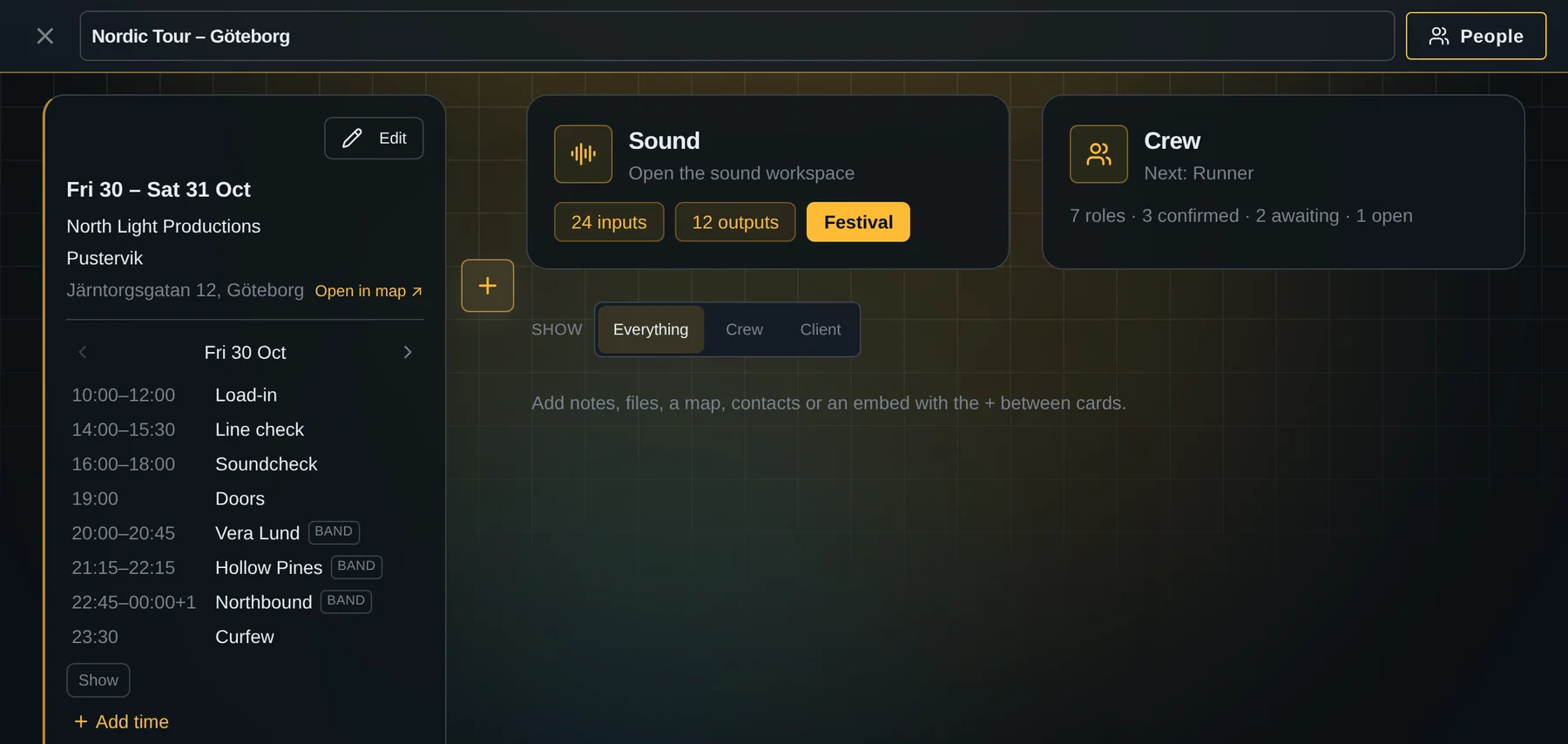
Dates, venue, address and the running order for each day. Notes, files and a map for whoever needs them. Sound, Lighting and Crew sit inside the project, so nothing gets copied between documents.
- One schedule for the gig: load-in, line check, doors, band times, curfew.
- Decide per person what they see. A visiting engineer can work in Sound, the client sees the times, your notes stay internal.
- Work on your own or as a company. A company shares its crew roster, logo and branding.
Sound
The input list is where it starts.
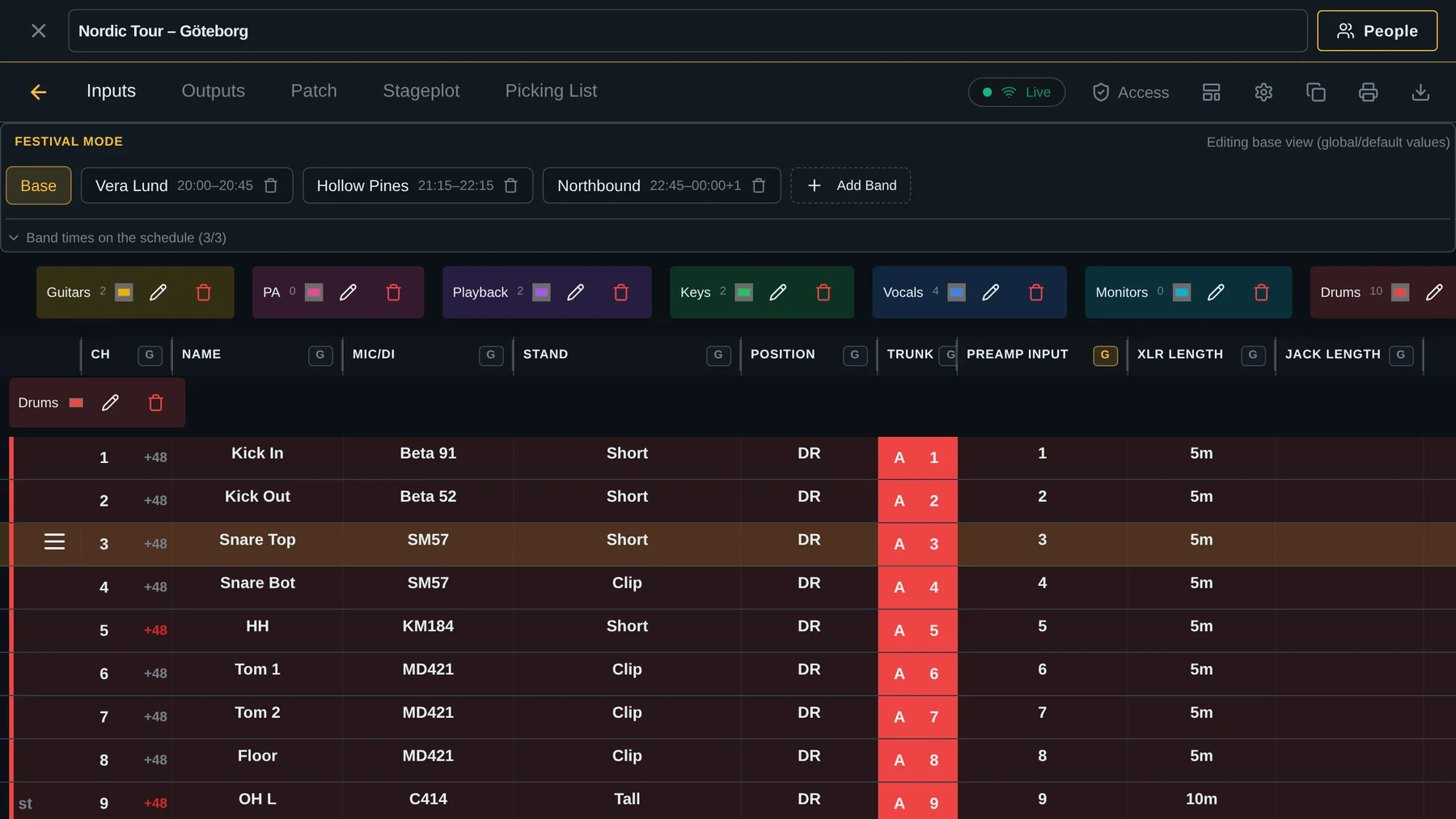
Build the input list once. Patch, trunks, stageboxes, outputs and the picking list come from it, and they change when it changes.
More about Sound →- Paste a channel list from a spreadsheet, then clean it up with autofill, ripple and multi-select editing.
- Trunk/Subsnake and stagebox views for patches that aren't 1:1.
- A 3D stageplot linked to your channels that works out cable lengths.
- A picking list counted from inputs and outputs, plus whatever you add by hand.
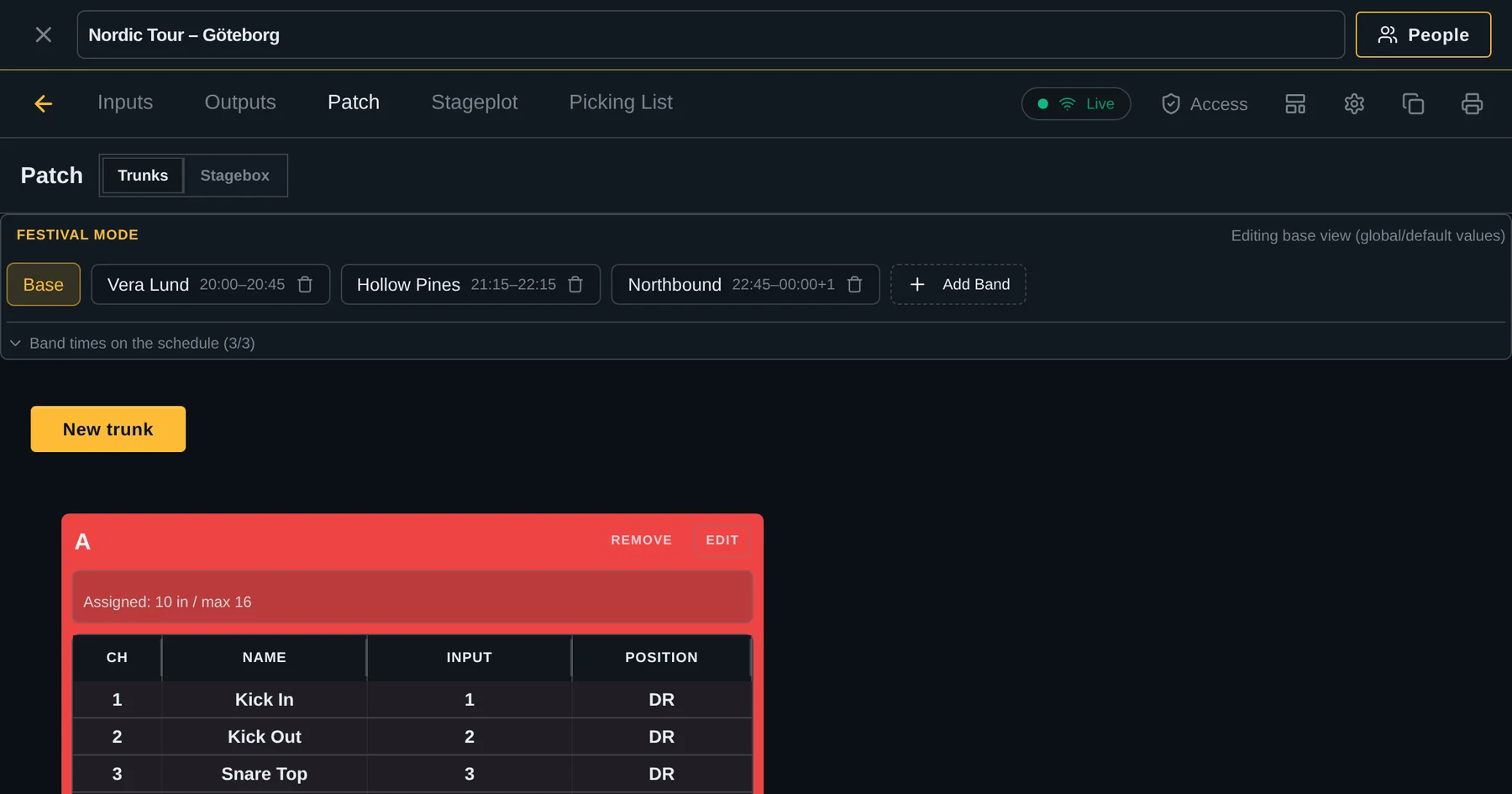
- Festival mode: one base patch, changes per band, and each band's slot on the schedule.
Lighting(Beta)
The rig, from plot to paperwork.
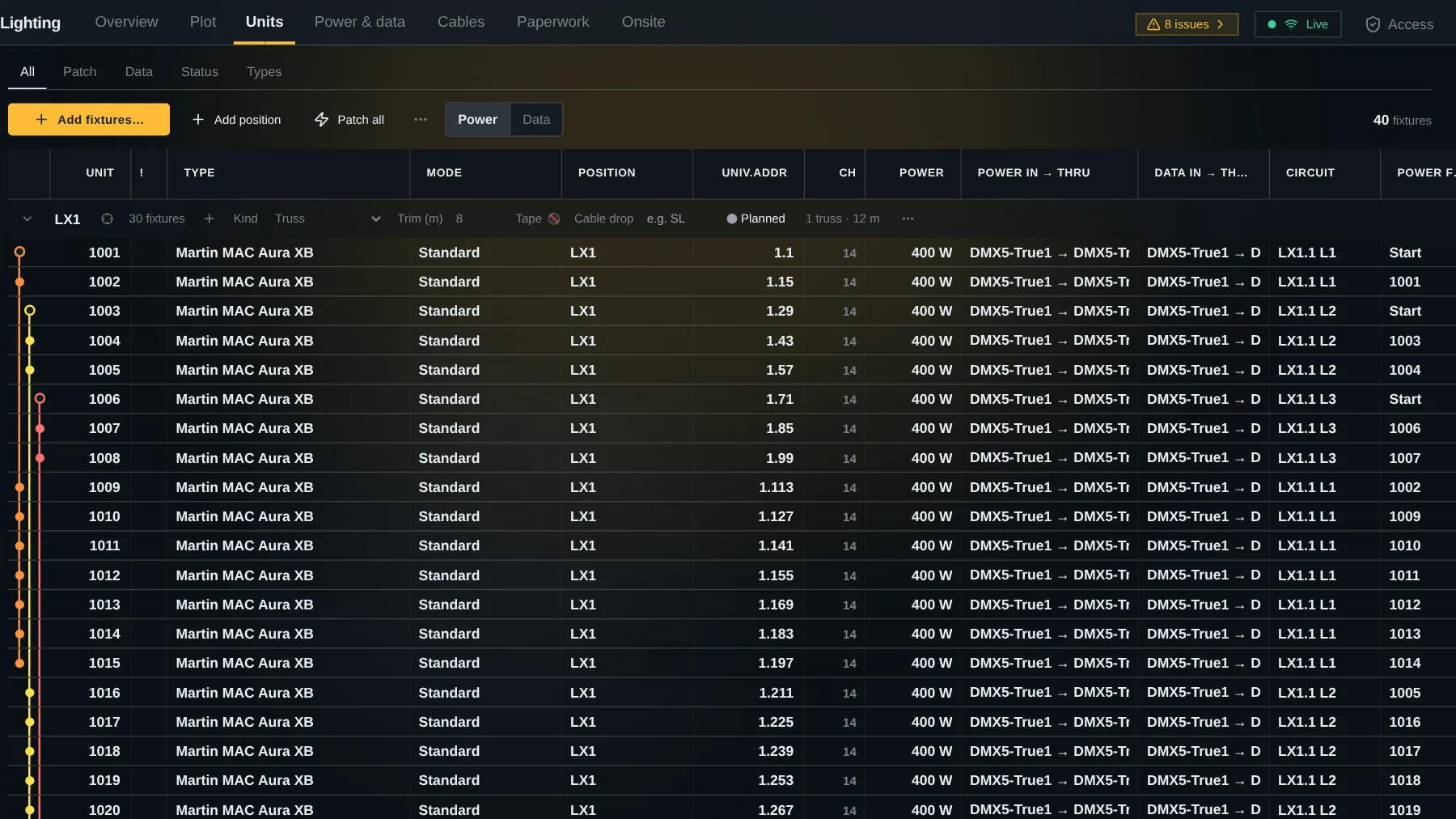
Positions, fixtures, patch, power and cables for the lighting rig, on the same 3D plot as the stage and Sound's gear.
In beta: it works, it is still changing, and we want to hear what is missing.
More about Lighting →- Units: every fixture under its position with type, mode, DMX address and circuit. Units and patch fill in per position.
- Power and data: PDUs, power feeds and circuits with the load per phase, data nodes and universes.
- Trusses and fixtures in the 3D plot, with feed and link lengths worked out from where things hang.
- MVR import from Vectorworks, Capture or grandMA3, and the paperwork as PDF.
Crew
Who's working, which days, and who has said yes.
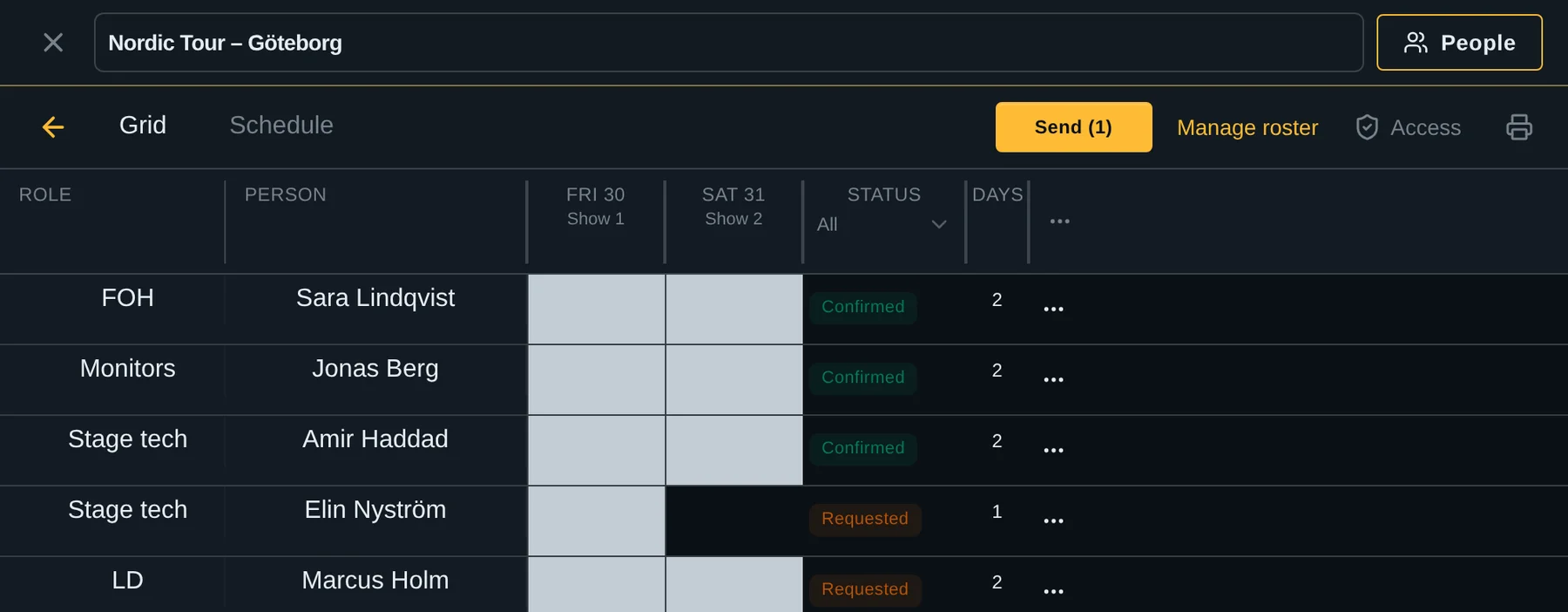
Keep your roster and roles in one place. Put people on the days you need them and send the booking request by email.
- People answer from the email with one click. No account needed to say yes.
- Every row shows where it stands: draft, requested, confirmed or declined.
- Everyone booked gets a page with their days, the times and the address.
- Crew lists and day sheets as PDF.
Everyone sees the same version.
A change shows up for everyone who has the project open, on a laptop at FOH or a phone at the stagebox. No reloading, no asking which file is the latest. Each project has its own chat for the things that don't fit in a cell.
Try it on your next gig.
Make a project, paste in an input list and see if it fits the way you work.
Made by touring sound and lighting techs.