Sound
One input list. Everything else follows.
Patch, trunks, stageboxes, outputs, the stageplot and the picking list are built from the same channels. Change a channel and every view that uses it changes with it.
Fast where it counts.
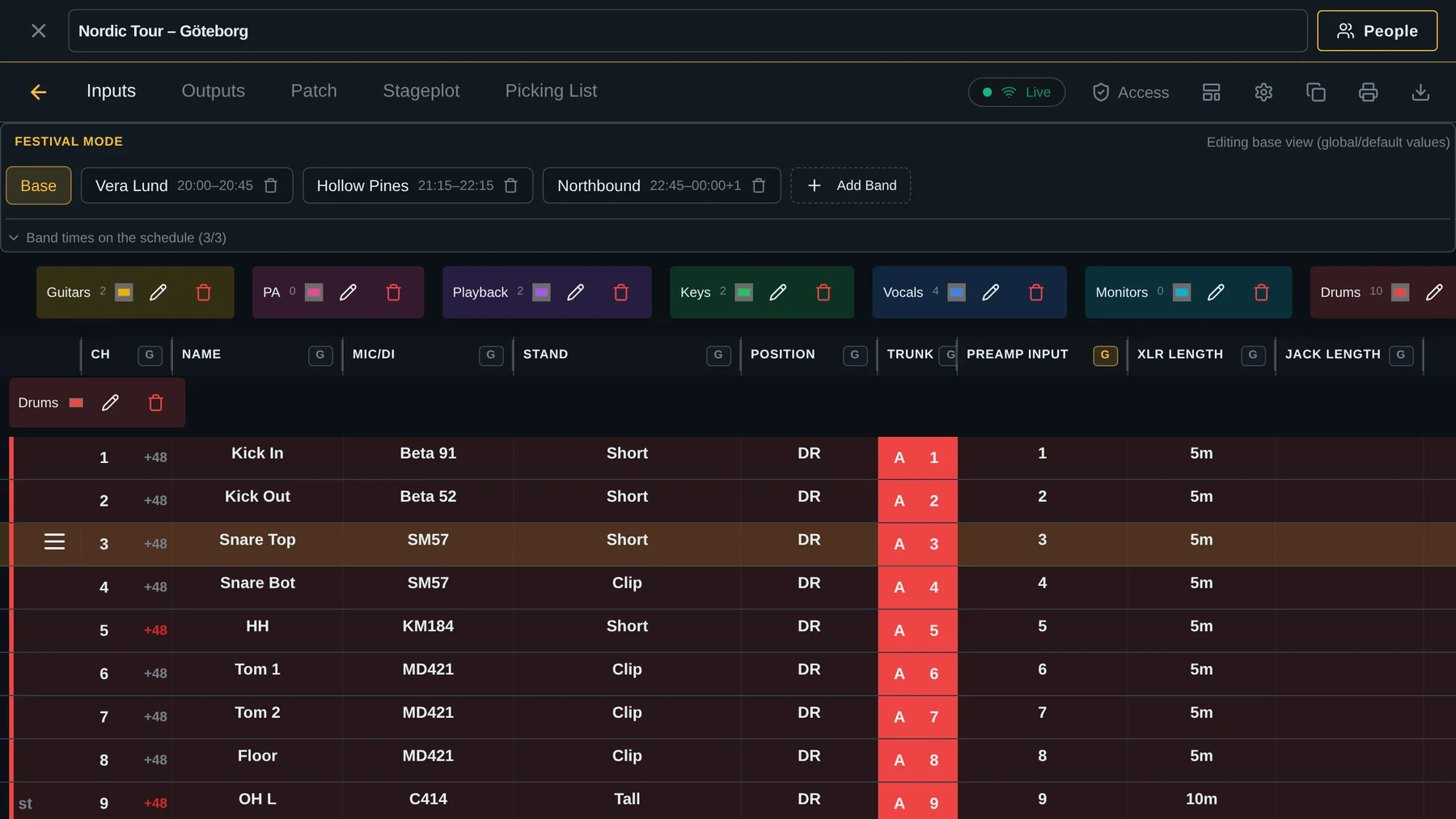
Input lists get typed in a hurry and changed all the time. The grid is built for that.
- Paste rows straight from a spreadsheet.
- Autofill stands, cables and preamps from rules you set up yourself.
- Ripple a change down the list, edit many rows at once, stay on the keyboard.
- Group channels by musician or instrument, each group with its own colour.
- Templates for the drum kit or the full setup you use every time.
- Pick mics, DIs and stands from your own gear catalog.
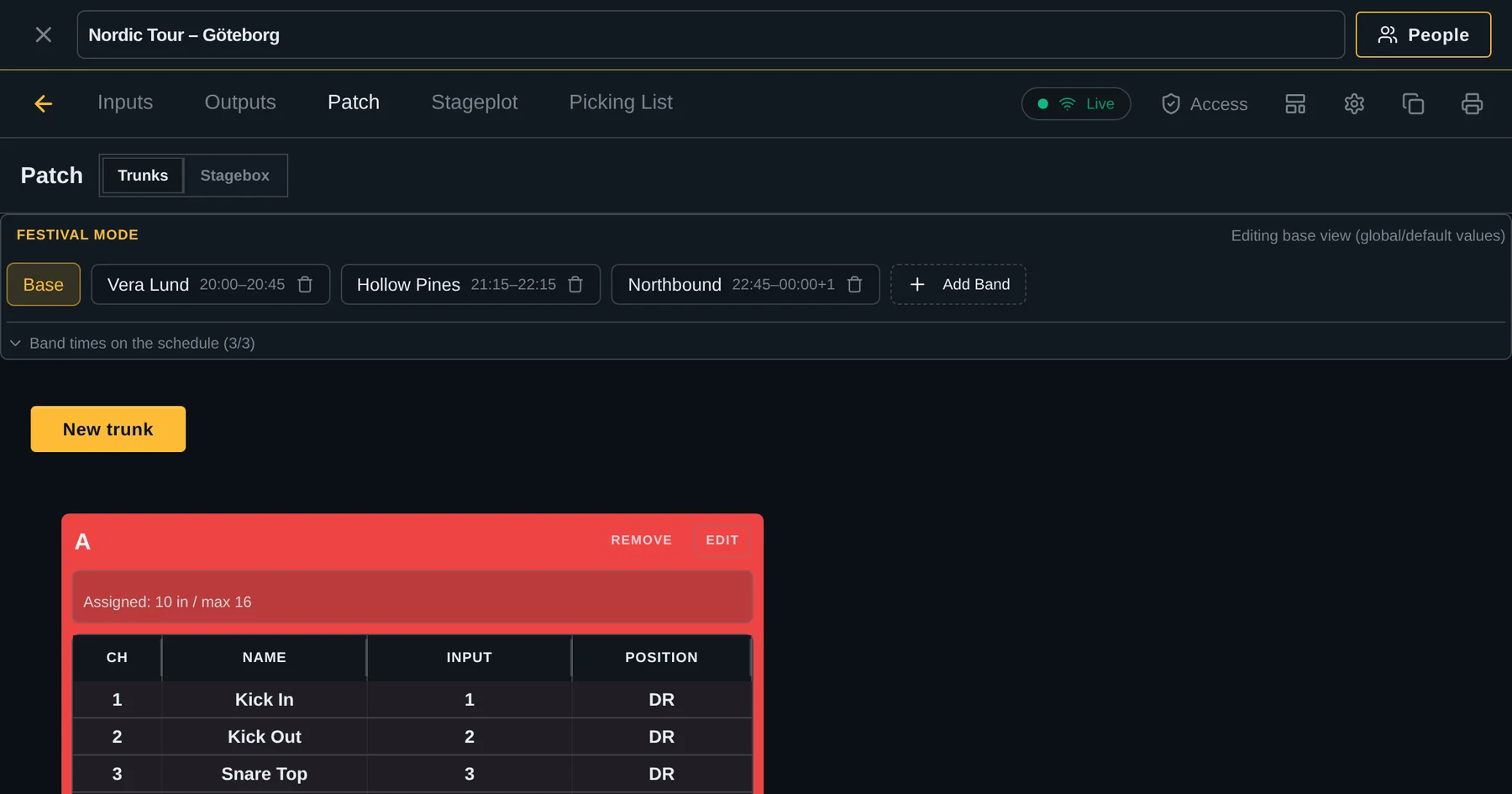
For patches that aren't 1:1.
Put channels on trunks and stageboxes and see what runs on each multicore. Outputs get the same treatment, with destination, cables and who each mix is for.
A stageplot that knows the channels.
Place risers, backline, mics and people in 3D. Link objects to channels and the plot works out cable lengths from where things stand.
- Switch between top view and 3D.
- Layers for staging, audio, backline and people.
The picking list counts itself.
Mics, DIs, stands and cables are counted from the inputs and outputs. Add spares and extra items by hand and print it for the warehouse.

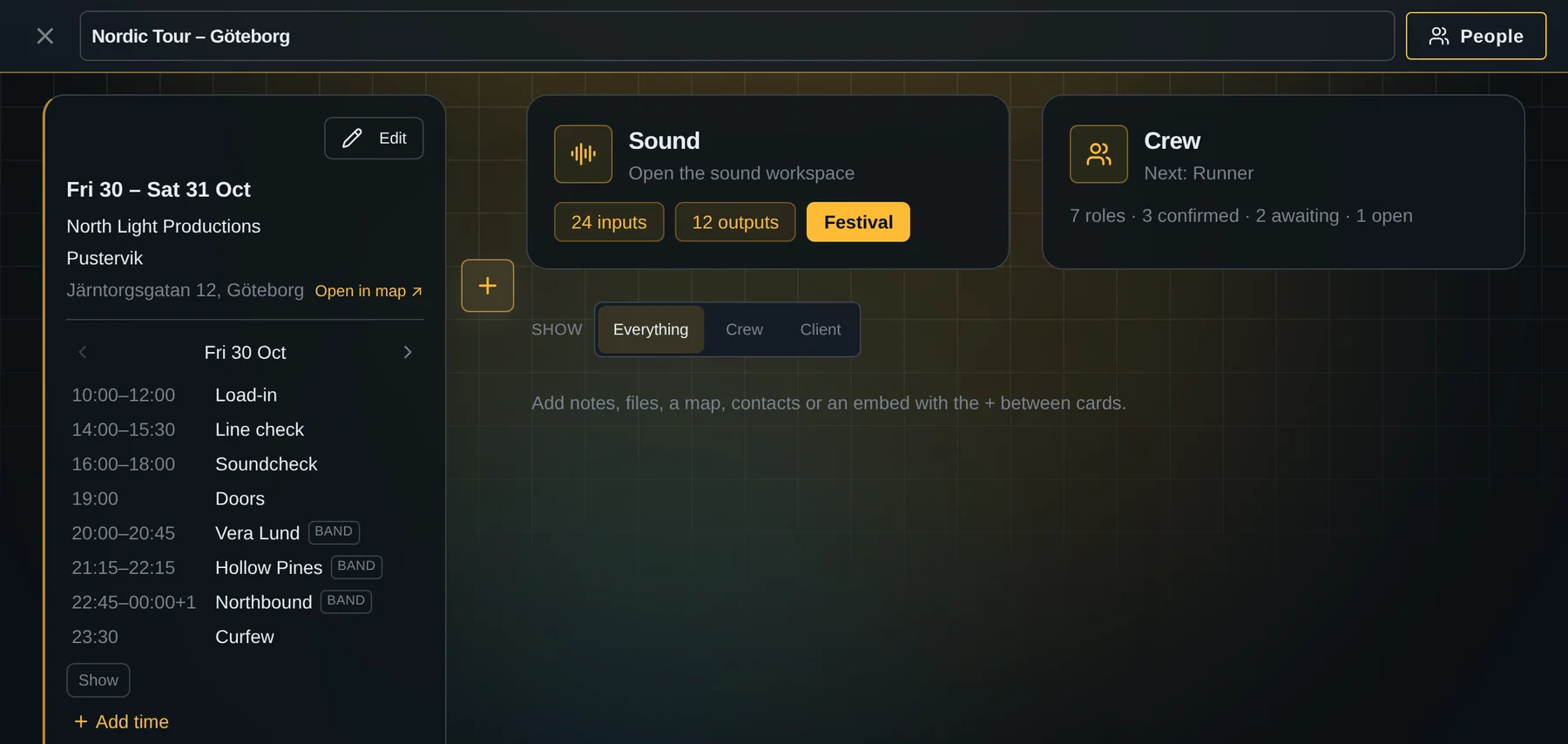
Festival mode for multi-band days.
Keep one base patch for the house and change only what differs per band. Each band gets its slot on the project schedule, so the running order and the patch live in the same place.
Try it on your next gig.
Paste in an input list and see if it fits the way you work.